
Sick Society.
Modern Western psychiatry is keeping us stuck in a cycle of sickness, and eventually I wanted out.

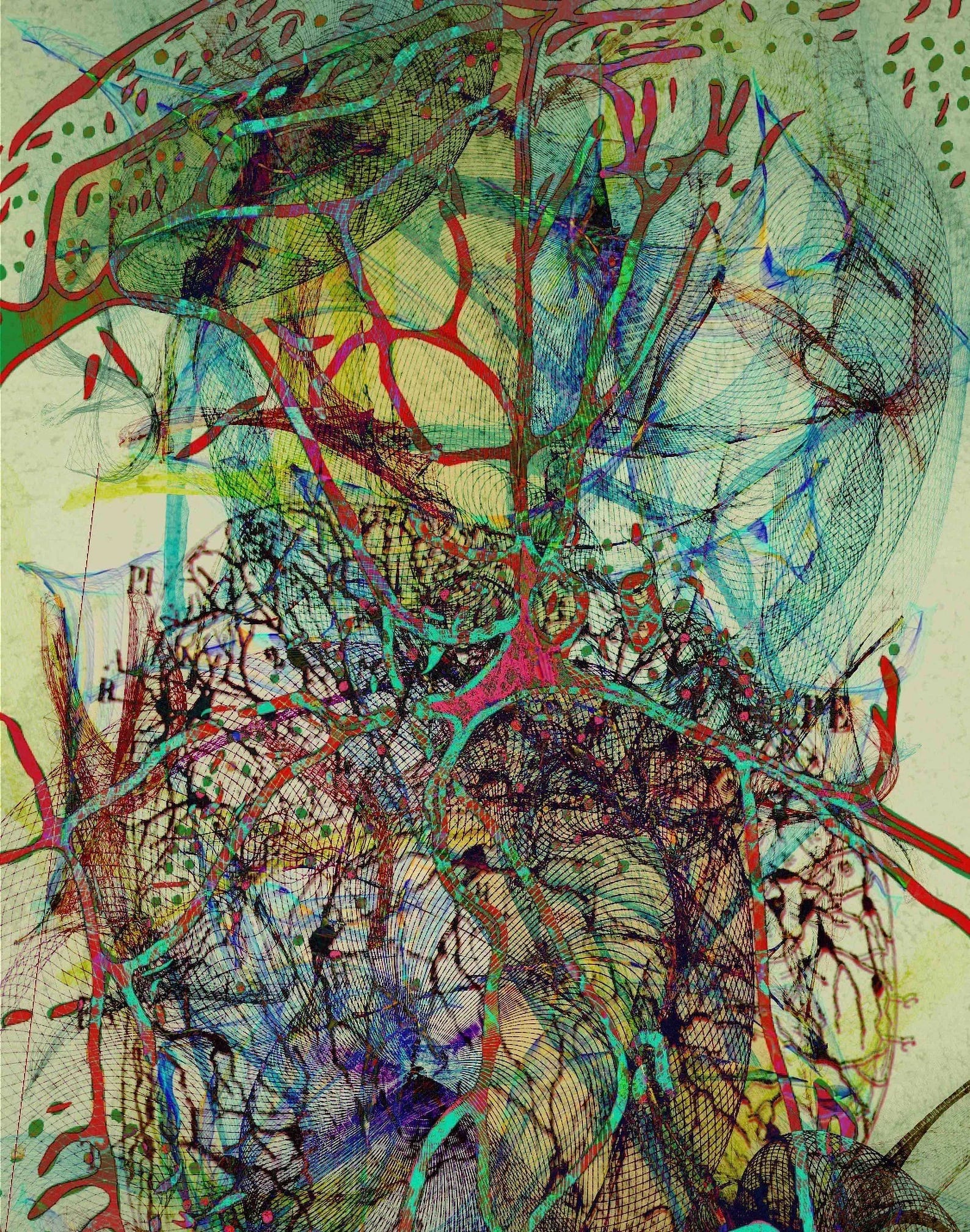
Paralysed with the fear of our own minds, the human condition in this stage of capitalism has been fettered with the alienation of self. The discourses surrounding ‘Mental Health’ have skyrocketed over the last decade, coupled with Big Tech’s strangulation on our society. It doesn’t take a professional to observe that the vulnerable are growing mentally sicker, where the discourse serves as a societal crutch. The plague of endless information within the infinity vortex of social media is a falsified mirage, manufactured with delusionary conviction that groups emotional reactions into disorders and diagnostics, providing a never-ending list of labels that have become identity-markers. Those muddled within it see no way out, entrapped in the enlistment of psychiatric disorder-based thinking, where the explanation provided is as such - you are defective.
I was once a victim to this too. Neurotically obsessed with a fixation on the symptomology of my own mind, I attempted to diagnose myself with disorder upon disorder at the slightest spur of an emotional reaction. It is easy to do when the individual is blamed for their own demise, as opposed to understanding that the interpersonal is always in a parasitic relationship with the violent confines of capitalism. So I boxed my complexities into diagnostics labels, with the end result leading to a stripping of my humanity and a profound alienation from my personhood. Situating myself in this way coaxed the spirit to become forcefully muted, where despite a persona of gutsy grandeur, the reality was a soul caged in. I wanted out.
To feel whole again took repositioning the self away from the individualistic decontextualised space of diagnostic frameworks that is often shaky, blurry, and up to the discretion and bias of the psychiatric observer. I no longer wanted to feel like a subject. The psychiatric framework is a facility in of itself, a mental asylum if you will. You do not need to reside in its ward to feel this. It relegates the vulnerable to perpetual cyclical crisis with no way out. When you believe that disorder is truth, there then lies a limitation in the ability to see oneself as an empowered person capable of eliciting change both interpersonally and societally. It hollows out relational existence by negatively exceptionalising the individual through binary modalities, causing an isolationism so deep that the individual can only value diagnostics over broader humanistic traits. In fact, traits in of themselves become proximate to the lines of diagnostic enquiry.
All of this is to say, Western psychiatry has not advanced the condition of the human, but rather put it in the gear of mental regression. It has relegated Human and Person as a lesser than position, demarcating exceptional difference through diagnostic defectiveness. The end goal is not to provide rehabilitation of the vulnerable individual that establishes their own humanity, but rather facilitate the invisibility of Human, trading this in for diagnostic identity-markers. If one diagnostic-identity does not seem fit, another is added. This is the life sentence given to the vulnerable under capitalism, as human suffering under violent capitalism and imperialist domination is not an apt enough explanation for the psychiatric modality.
When your mother dies three months after you turn eighteen, and rather suddenly at that, life feels like a matrix of disorientation. In an attempt to ‘solve’ this disorientation, I found myself in the waiting room of my local NHS mental health service counting down the minutes until I would be called in to see the psychiatrist. There is something dismally lifeless and bleak about the NHS mental health service, where the icy blue walls wailed like tortured ghosts from the past. If they were trying to provide mental relief here, this certainly did not seem the place to do it. The mentally fragmented individuals attempting to gain respite would be handed the infamous depression questionnaire, and if you weren’t already thinking of ending your life, you’d be sure to tick 10 on the scale purely for the melancholic atmosphere and uncomfortable chairs alone.
I walked into the psychiatrists’ office and left with a diagnosis of depression paired with a packet of fluoxetine (Prozac for the American readers). I hadn’t digested that to a psychiatrist, the combination of a parental death alongside being in my final year of A levels (examinations before university) would require I numb myself out. My very real pain regarding my mother dying was presented as an inconvenience to my educational completion. The solution to grief was supposedly found in the SSRI. I looked at the packet, toying with it in my hand, put it in my coat pocket, and walked home. If the pain was the inconvenience, I found the side effects of temporarily heightened suicidality even more inconvenient, and ended up throwing the packet away.
It was sheer desperation that led me back to the same psychiatrist five years later, where I was convinced it had to be bipolar, or BPD. I never took the SSRIs, but the ADHD medication that followed my diagnosis was not the life-saving pill it was made out to be, so the conclusion I drew was if one disorder doesn’t explain this continual sequence of excruciating mental injury, another one will. Over zoom, the psychiatrist said “I can’t diagnose you with that. You are not a diagnosis, you are reacting to the trauma you have been through, but with the right tools and resources, I have faith that things will get better for you.”.
When the person that hands you medication to numb your grief at eighteen has the ability to offer a critical challenge against diagnostics five years later, you are left with an obscure confusion. I couldn’t quite wrap my head around it, but what it revealed to me was that even those working in the psychiatric unit were growing tired of existing models.
My experience of pathologising my grief did not result in desirable outcomes. I spent years lamenting my mother’s death, inspecting all of my behavioural patterns in the aftermath as if something was innately wrong within my psyche. Ruminating over the pitfalls of my mental health with a magnifying glass simply made things worse, and only this year did I fully grasp that my preoccupation with psychiatric diagnostic-disorder based thinking caused a sickness so deep that if I were in the 1950s I may have considered a lobotomy. I commend the Soviets for banning lobotomies in the 50s, and whilst psychiatry has evolved past placing women’s brains under surgical incisions, the mental torture that capitulates in the mind at the time of awful pain will still land many women in the mad category today, where psychiatry’s solution is to administer a dose of numbness.
I think often about this quote below from the Native American author Louise Erdrich:
“Life will break you. Nobody can protect you from that, and being alone won't either, for solitude will also break you with its yearning. You have to love. You have to feel. It is the reason you are here on earth. You have to risk your heart. You are here to be swallowed up. And when it happens that you are broken, or betrayed, or left, or hurt, or death brushes too near, let yourself sit by an apple tree and listen to the apples falling all around you in heaps, wasting their sweetness. Tell yourself that you tasted as many as you could.”
A diagnosis never did encapsulate my life experiences. Recovery had to be greater than the death sentence of the defective-disorder label. Recovery was the acceptance that my reactions and feelings were part of the broader makeup of my own life experiences, as well as an existence within this hellscape of a system. Suffering was going to be an inevitable part of my reality, for suffering is a core tenet of life. I just had to find ways to integrate that without letting it destroy me further. Whilst pain does not seize my daily operations anymore in the sense of debilitation, the narration of coming out of the other side is not a neat coherent embodiment of completion for we are continually in orbits of evolution. For me personally, this evolution would have been stunted had I continued to opt into the psychiatric modality. When I finally detached myself by actualising these beliefs rather than teetering on theoretical frameworks, I felt as liberated as I could within my own mind that formerly served as a worn out jail cell. I am learning to view my actions in the realm of being Human, rather than as pathology. I am learning that feeling is not bad, and negative emotions are absolutely okay and even welcome for they show me that I am a Person. Echoing Erdrich, I am no longer afraid to be swallowed up.
In a data-driven world, there is no metric in healing, nor do I comply with the notion that anyone can possibly be ‘healed’. I only know from my own suffering that when I anecdotally describe the culmination of life-altering experiences over my lifetime, that are not just limited to my mother’s death, spectators are usually taken aback that I no longer invest in interpreting the world through disorder, and have somehow cultivated a reality detached from diagnosis. The spectrums of binary group-thought seep out as you are either category a) vulnerable and sick or b) normal. There is a third, and that is the hijacking of narrativised storytelling that harps on feel-goodism laced with underpinnings of shame often belonging to the ‘you can do anything’ motivational relics and the fanatical ‘manifestation’ gurus. Existing without these categorisations, and in the simple form of Human, does not render satisfactory to the people invested in identity, for if you have suffered you must still be defined through it, or come out as a motivational authority.
It can be deeply unsatisfactory to provide capitalism as the explanation for suffering alone, for under any system suffering will always amalgamate through grief, heartache, loneliness, amongst other permeating, but also very human, feelings. Yet, it cannot be denied that capitalism facilitates the breeding ground for suffering to penetrate the human experience in dismal ways, and in many cases is the root cause of it. Take for example losing a loved one – funeral costs can be disgustingly high, rendering many to the fundraising stage in the immediacy of loss as opposed to grieving. In more direct cases, poverty created by capitalism is the killer and primary cause of death. Another example is a woman making the decision to either face domestic violence in order to be housed, or face houselessness if she wants to escape her abuser. In the psychiatric domain, the woman would be demarcated to the position of diagnosis, and the emotional reactions presented would usually land her the bipolar/BPD/schizoid trifecta as opposed to firstly, enabling her to make sense of her experience, and secondly, empowering her as a survivor. In the instance of the grieving family fundraising for funeral costs, medication may be given to numb the individual, much like my own case, without even acknowledging how unethical the reality of funeral costs are. What psychiatry does is prey upon the human spectrum of emotions and relegate them to the positionality of unnatural, etching an anti-human cast onto feeling itself. The modus operandi of capitalism is to extrapolate profit, and psychiatry is a product of this, where each person is merely a subject rather than an expansive and complex being.
This is not to say this whole framework can be collapsed tomorrow. Without the parameters of revolutionary organising, the removal of capitalism, and the rebuilding of a new economic system (socialism), psychiatry will continue to exist in its current iteration. There is also no denying that some of these frameworks have been useful in giving language to how people feel. Thus, the issues lie structurally, rather than a burden on the individual. Nonetheless, I believe it is still important individually in our day to day to detach from these frameworks as solidified identities, and utilise them as loose symptomatic guides only to provide a baseline insight into some of our difficulties. Beyond this, we must think of our own humanity first. You are more than a disorder label.
This piece is the first of an ongoing discussion on my Substack regarding critique on psychiatrisation. This is not an expansive piece but rather serves as an introduction. I will delve deeper in upcoming pieces into the specifics of these critiques with readings and research. My hope is to create a collective of people who slowly shift away from colonial and capitalist labels to more humanistic and compassionate observations of our emotional pain and experiences under capitalism.